
Mehrangarh Fort: A Complete Guide to Jodhpur’s Royal Icon

Don’t Miss These Top 8 Jaisalmer Attractions on Your Rajasthan Trip
March 17, 2026
Complete Guide: Things to Do in Udaipur & Places to Visit
April 8, 2026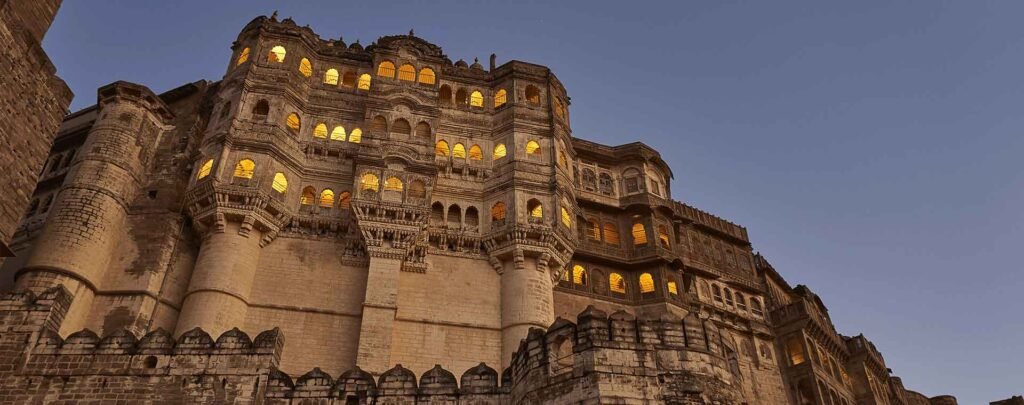
Rising majestically above the “Blue City” of Jodhpur, Mehrangarh Fort stands as a testament to the architectural brilliance and indomitable spirit of the Rathore Rajputs. Spanning over 1,200 acres and perched atop a 410-foot-high cliff, this citadel is not just a monument; it is a living chronicle of Rajasthan’s royal past. Whether you are a history buff, a photography enthusiast, or a traveller seeking the soul of Marwar with a group via a tempo traveller in Rajasthan, this guide to the Mehrangarh Fort Jodhpur will help you navigate one of India’s most magnificent landmarks.
The Epic Saga: Mehrangarh Fort History
The story of Mehrangarh, Jodhpur, begins in 1459, when Rao Jodha, the 15th Rathore ruler, decided to shift his capital from the nearby Mandore to a more secure, elevated location. He chose a rocky hill known as Bhakurcheeria (the Mountain of Birds). However, the construction was not without its legends.
According to local folklore, to build the fort, Rao Jodha had to displace a hermit named Cheeria Nathji. The hermit, angered by the intrusion, cursed the kingdom with eternal drought. To appease the gods and counteract the curse, a local man named Raja Ram Meghwal voluntarily agreed to be buried alive in the foundations of the fort—a sacrifice that is still remembered today by a plaque near the memorial.
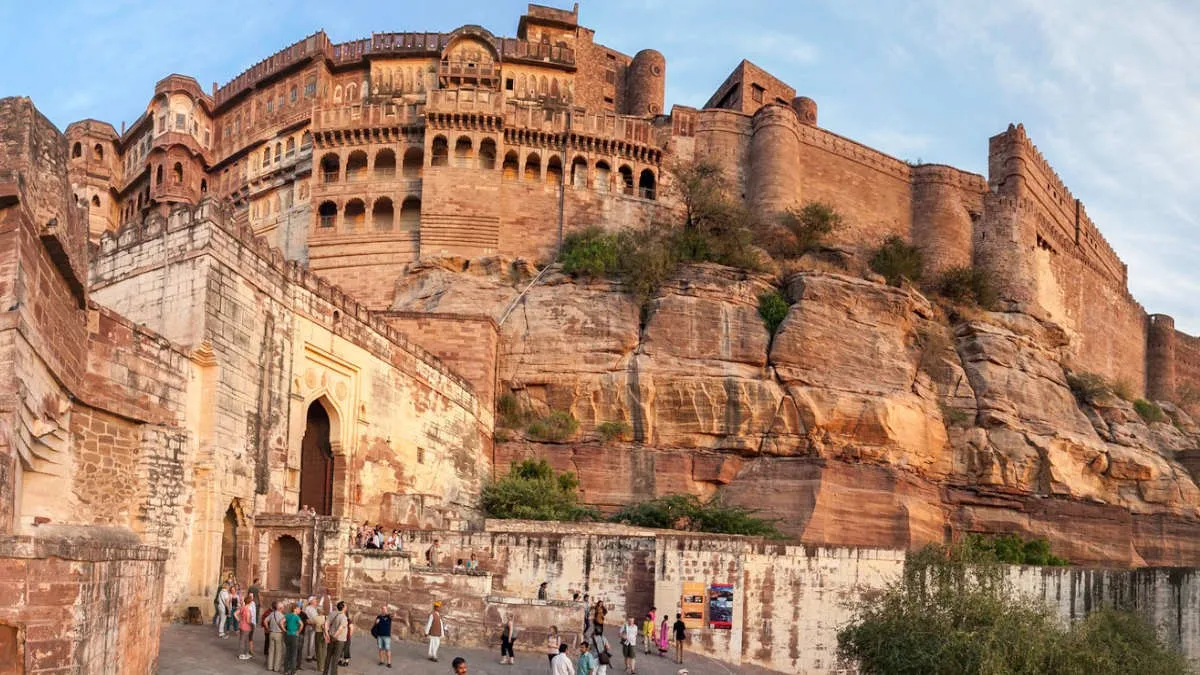
While Rao Jodha laid the foundation, the Mehrangarh Fort history spans over five centuries. Most of the imposing structures we see today, including the massive walls that reach heights of 120 feet, were built during the reign of Maharaja Jaswant Singh in the 17th century.
Entering the Citadel: The Seven Gates
As you ascend the winding path toward the Jodhpur Fort, you pass through seven massive gates (pols), each with its own story of victory and valour:
- Jai Pol: Built by Maharaja Man Singh in 1806 to celebrate his victory over the armies of Jaipur and Bikaner.
- Fateh Pol: Constructed to commemorate the victory of the Rathores over the Mughals in 1707.
- Loha Pol: The final gate leading into the main part of the fort. It is hauntingly famous for the handprints of the royal Sati—the queens who immolated themselves on their husbands’ funeral pyres.
- Dedh Kangra Pol: This gate still bears the scars of cannonball hits from attacking armies, providing a raw look at the fort’s defensive struggles.
Exploring the Mehrangarh Fort and Museum
One of the most significant highlights of your visit will be the Mehrangarh Fort and Museum, which is regarded as one of the best-stocked museums in India. The museum is housed within the beautiful palaces of the fort and offers a glimpse into the lifestyle of the Rathore royalty.
The Palatial Wonders
The interiors of Mehrangarh Fort are a stark contrast to its rugged exterior. The delicate carvings and expansive courtyards are breathtaking.
- Moti Mahal (Pearl Palace): Known for its ceiling decorated with gold leaf and seashells, which glow like pearls when lit.
- Phool Mahal (Flower Palace): An opulent chamber used for private audiences, featuring intricate paintings and gold-plated filigree.
- Sheesh Mahal (Mirror Palace): A stunning example of glasswork where thousands of tiny mirrors reflect light to illuminate the room.
- Takhat Vilas: The personal chamber of Maharaja Takhat Singh, decorated from floor to ceiling with traditional paintings.
The Museum Galleries
The Mehrangarh Fort and Museum showcases an incredible collection of royal artefacts:
- Elephant Howdahs: Silver and gold-embossed seats used by the kings while riding elephants.
- Palanquin Gallery: A display of exquisitely decorated litters used by the royal ladies.
- Armoury Gallery: A fearsome collection of swords, shields, and daggers, including the legendary sword of Emperor Akbar.
- Daulat Khana: This gallery houses some of the finest Mughal-era art and relics.
Photography at the Fort: Capturing the Blue City
For those looking for the perfect Mehrangarh Fort photos, the ramparts offer an unparalleled panoramic view. From the edge of the fort, you can see the iconic indigo-hued houses that give Jodhpur its name. The best time for photography is during the “Golden Hour”—just before sunset—when the red sandstone of the fort turns a deep, fiery orange.
Don’t forget to visit the Chamunda Mataji Temple located at the southern tip of the fort. This temple was Rao Jodha’s favourite and remains a highly revered site for the locals.
Planning Your Visit: Essential Information
To make the most of your trip to the Mehrangarh Fort, Jodhpur, and explore the best places to visit in Jodhpur, keep these practical details in mind:
Timings and Best Time to Visit
- Operating Hours: 9:00 AM to 5:00 PM daily.
- Best Months: October to March is the ideal window, as the Rajasthan heat can be quite intense during the summer.
- Duration: You will need at least 3 to 4 hours to explore the museum and the battlements thoroughly.
Entry Fees (2026 Prices)
- Indian Nationals: 100 INR.
- Foreign Tourists: 600 INR (includes an audio guide).
- Elevator Fee: If you wish to skip the steep climb, an elevator is available for a small fee (approx. 50 INR).
How to Reach
Mehrangarh Jodhpur is centrally located and visible from almost anywhere in the city.
- By Auto-Rickshaw: The most common way to reach the entrance from the Clock Tower area.
- By Walking: You can hike up through the old city lanes, though the path is steep.
- By Taxi: Cabs can drive you right up to the main ticketing area.
Beyond the Walls: Rao Jodha Desert Rock Park
Adjacent to the Mehrangarh Jodhpur complex is the Rao Jodha Desert Rock Park. This 72-hectare park was created to restore the natural ecology of the rocky wasteland. It features walking trails that offer stunning views of the fort’s exterior and the volcanic rock formations that are millions of years old. It’s a peaceful escape for nature lovers and offers a different perspective for your Mehrangarh Fort photos.
Conclusion: Why You Must Visit Mehrangarh
The Mehrangarh Fort, Jodhpur, is more than just a historical site; it is a symbol of endurance. From its legendary foundation to its survival through countless sieges, the fort remains the heart of the Marwar region. Whether you are marvelling at the “Elephant Howdahs” in the Mehrangarh Fort and Museum or standing on the ramparts looking out over the Blue City, the experience is nothing short of royal.
As Rudyard Kipling once described it, this is “a palace that might have been built by Titans and coloured by the morning sun.” No trip to Rajasthan is complete without stepping through the gates of this majestic Jodhpur fort.